- October 23, 2026
- |Commercial Services, Emergency, Locksmith Services
- | 0
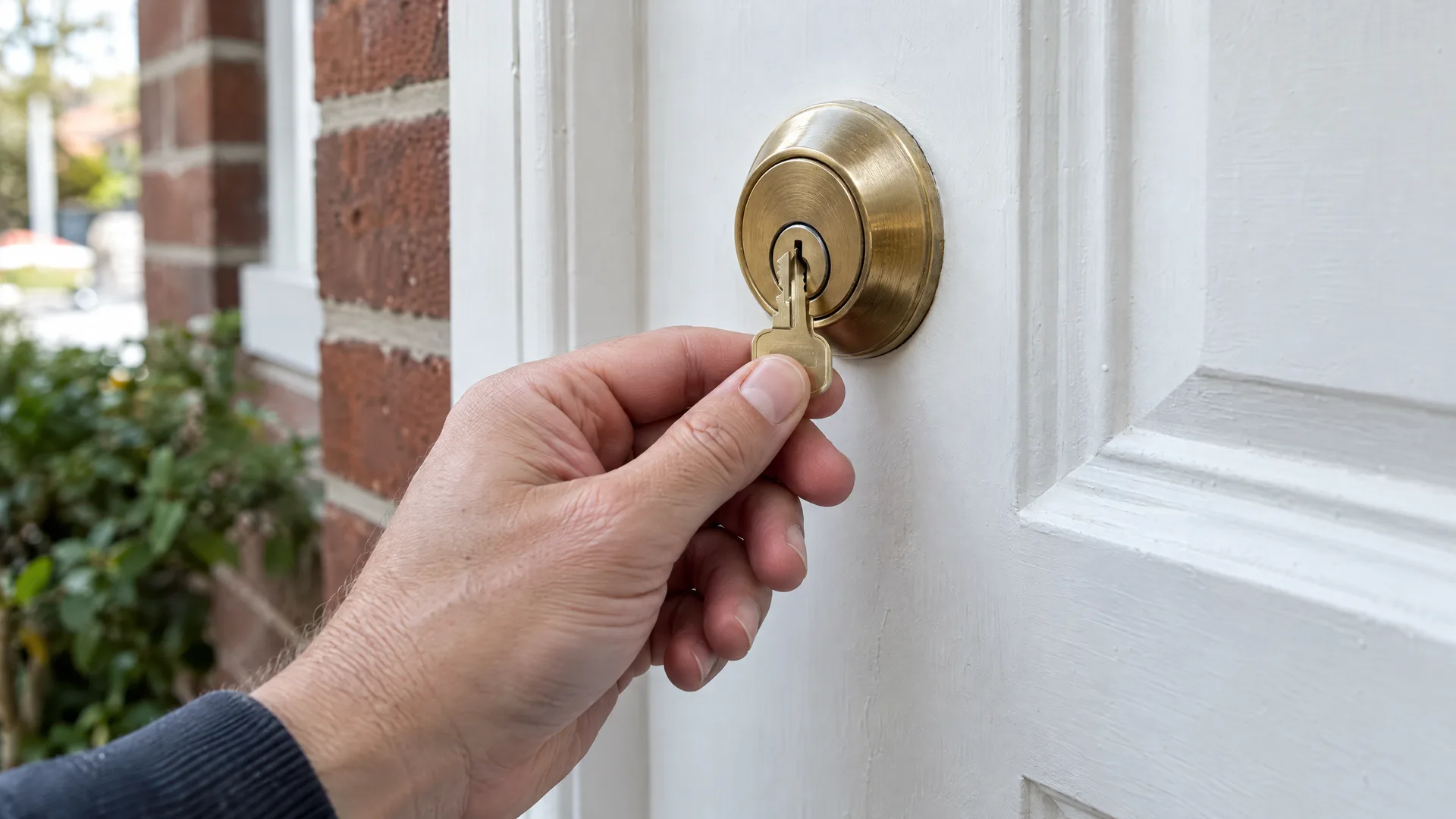
If your key is stuck in a lock, stop pulling. Turn it back to the position it went in at, take the pressure off the door, hold the face of the lock still and ease the key out with small wiggles. If it’s snapped off inside, stop using the lock and call a locksmith.
Stuck and broken keys are everyday jobs for us as a mobile locksmith in Kew. Most of the time the key isn’t the real problem: it’s a worn copy, a door that’s dropped, or a lock that’s slipped out of step. Below, we explain how to tell which one you’ve got, what’s safe to try yourself and when it’s time to call.
This guide covers house, unit, shop and office doors. We don’t work on car locks.
[INSERT IMAGE HERE: key-stuck-in-lock-front-door-kew.webp | Alt text: Hand easing a brass key out of a brass deadlock on a white painted timber front door]My key is stuck in the lock. What should I do first?
Stop pulling and let go of the key for a moment. Most stuck keys come free with patience rather than strength, because pulling hard jams the key tighter against the pins inside the lock. Work through these steps in order, gently, and stop if the key starts to bend.
- Turn the key back to where it started. A pin tumbler lock only releases the key at its home position, the angle it went in at. For most Australian house keys that’s straight up. If the key is even slightly off, the pins can’t drop back into place.
- Take the pressure off the door. Push the door firmly towards the frame, or lift it slightly by the handle, while you try the key. A bolt or latch pressing on the strike plate can hold the key in place.
- Hold the lock still. Press a finger against the face of the cylinder (the round part around the keyhole) and ease the key straight out. Sometimes the inner barrel creeps forward with the key and binds.
- Tap, then wiggle. Push the key in a fraction, then wiggle it up and down and turn it a degree or two each way while drawing it out slowly. This lets the pins settle instead of grinding against the key, and it’s the tip that frees most stuck keys.
- Know when to stop. If it’s still stuck after a few minutes, leave it in the lock. Every extra minute of force raises the chance the key snaps, and a snapped key is a bigger job than a stuck one.
Don’t reach for pliers or vice grips. They twist a soft brass key until it breaks, usually right at the keyway, where the broken piece is hardest to reach.
A stuck key almost always comes out with finesse, not force. Pulling harder is how a stuck key becomes a snapped one.
Why won’t my key come out? Match the symptom to the fix
Where the key gets stuck tells you most of what’s wrong. A key that comes out with the door open but not with it shut points to the door or bolt, not the key. A key that turns too far points to the lock’s insides. Find your symptom in the table below.
| What’s happening | Likely cause | What to try first | When to call us |
|---|---|---|---|
| Key won’t come out after locking or unlocking | The key isn’t back at its home position, or a worn key is catching on the pins | Return it to the start position, hold the cylinder and wiggle gently | It’s still stuck after a few minutes |
| Key comes out with the door open, but not with it shut | The bolt or latch is binding on the strike plate because the door has dropped or swollen | Push or lift the door to take the pressure off, then try again | Every time it happens: the strike plate or door needs adjusting |
| Key stuck half turned | A slipped cam, or a bolt jammed partway out | Turn it gently back the way it came, never forward with force | It won’t go back, or the door won’t lock |
| Key turns too far and won’t come back upright (locks keyed on both sides) | The two halves of the cylinder have slipped out of step | Put a key in the other side, turn it, then try the first key again | It keeps happening: the cylinder needs replacing |
| Key won’t go in or turn from the outside | A key is sitting in the inside of the lock, or something is blocking the keyway | Ask whoever’s inside to take their key out, and check the keyway for debris | You’re locked out and no one’s inside |
| Key goes in but won’t turn | A wrong or badly worn key, dirt, or worn pins | Try an original spare key, then a lock lubricant | The spare doesn’t work either |
| Key snapped in the lock | A worn, bent or cheap key, or too much force | See the section on broken keys below | Almost always |
The “turns too far” fault is common on locks keyed on both sides, and it often starts when someone turns one side while a key is sitting in the other (children playing with the door is a classic). Putting a key part of the way into the other side and turning it can bring the two halves back into line. Go gently, because it’s easy to snap a key doing this. Even if it works, get the lock checked: a cylinder that’s slipped once can stick in the locked position next time.
If a key is jammed in the inside of a locked door and you can’t get out, treat it as urgent, especially at night. Use another exit if you have one and call a locksmith. If someone is at risk and can’t get out, call Triple Zero (000): Triple Zero Victoria says an emergency includes danger to life, health or property.
Why do keys get stuck in locks?
Keys usually get stuck because something has worn or shifted: the key, the pins inside the lock, or the door itself. Dirt and old, sticky lubricant make it worse. A key that’s started to stick is a warning sign, because the same faults are what eventually snap a key off inside the lock.
- Worn or badly cut copies. Every copy cut from a copy loses a little accuracy, and soft brass keys wear down with daily use.
- Bent keys. A key that’s been used as a lever, sat on or hung from a heavy keyring can bend just enough to bind. Lay it on a flat surface: if it rocks, replace it.
- Dirt and gummed-up lubricant. Dust, pocket lint and old oily sprays build up in the keyway and stop the pins moving freely.
- Worn pins and springs. In an older or heavily used lock, the parts inside wear and stop lining up cleanly. We see this a lot on busy shop and office doors.
- A door that’s moved. Doors drop on their hinges, and timber swells and shrinks with the seasons, so the bolt starts rubbing on the strike plate. That pressure grips the key.
- A mechanism out of step. A slipped cam, or the two halves of a double-sided cylinder out of line, stop the key reaching its home position.
Can you put WD-40 in a key lock?
Yes, as a one-off to free a stuck key or flush out grime, but it isn’t the right long-term lubricant. WD-40 Australia says its Multi-Use Product can be used on locks, while lock makers recommend dedicated lock lubricants, because oily residue collects dust and can gum up the pins over time.
The advice online is split, and both sides have a point. WD-40 Australia’s FAQs say to spray the Multi-Use Product into the lock, leave it to soak in and wipe away the excess. ASSA ABLOY’s care and maintenance recommendations say to lubricate key cylinders with a dedicated product, Inox MX3, and to keep cleaning fluids out of the lock and cylinder.
Our view: a short squirt is fine to help free a key that’s stuck because of dirt. Work the key in and out, wipe it clean each time, then follow up with a proper lock lubricant once the lock is dry. Don’t make an oily spray your regular lock lubricant, and don’t expect it to fix a mechanical fault. We cover regular care in how to maintain door locks and prevent failures.
WD-40 can free a key that’s stuck because of dirt, but no spray will fix a slipped cam, a worn key or a door that’s dropped.
What’s the best lubricant for a stuck lock?
The best lubricant for a stuck lock is one made for locks: a dry lock spray, graphite powder, or the product the lock’s maker recommends. ASSA ABLOY recommends Inox MX3 for its key cylinders. Put a small amount on the key blade, then work the key in and out to spread it through the lock.
- Wipe the key clean and clear any visible dirt from the keyway.
- Put a small amount of lock lubricant on the key blade, or give the keyway one short puff of spray.
- Insert the key and turn it fully both ways five or six times.
- Pull the key out, wipe it, and repeat until it comes out clean.
Don’t mix products. Graphite and oily sprays combine into a paste that clogs the pins, so if a lock has already had one, ask a locksmith before adding the other. ASSA ABLOY suggests lubricating key cylinders at least once a year, or sooner if the key starts to feel rough going in or out.
What should you do if your key snaps off in the lock?
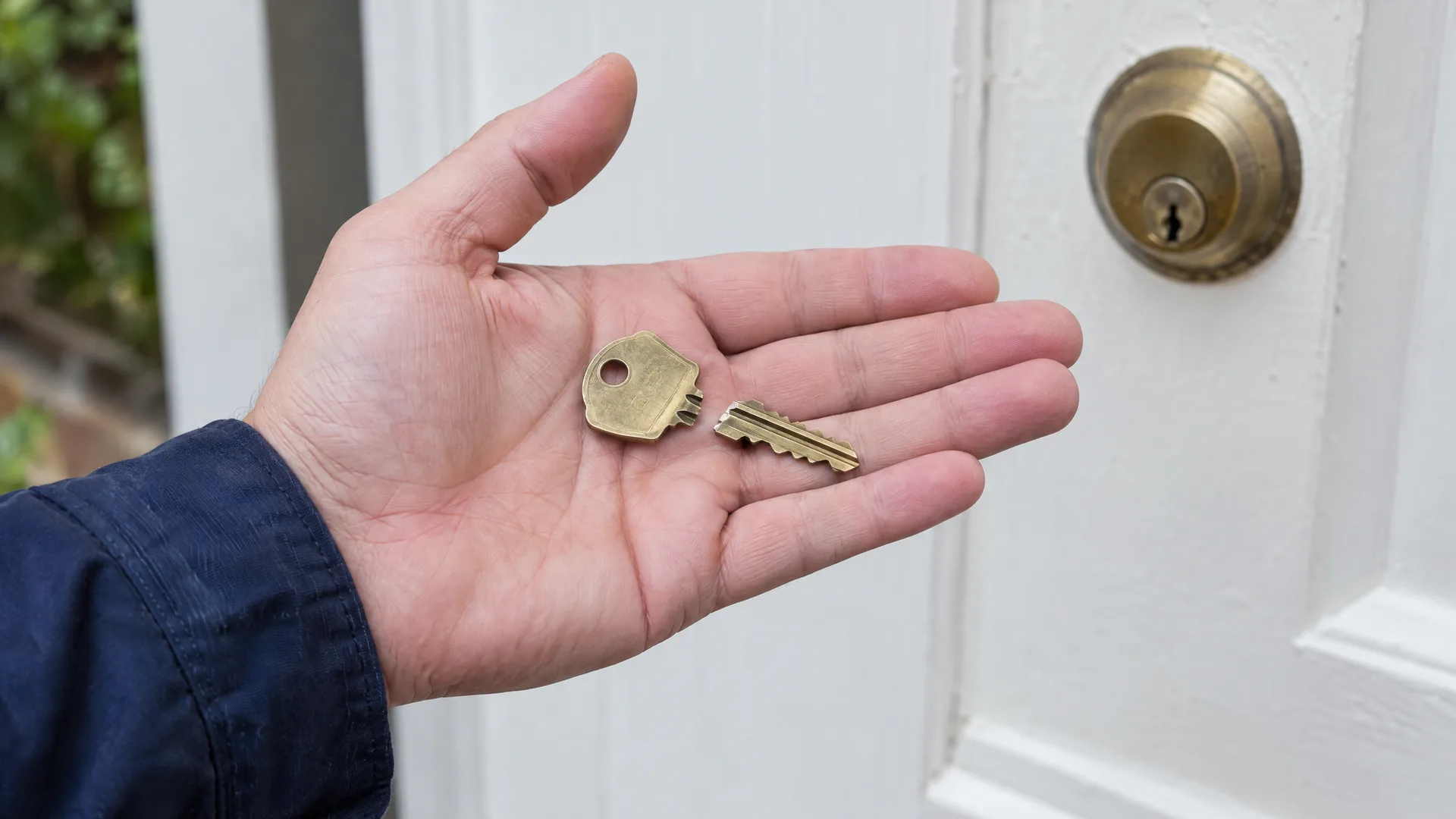
Stop using the lock straight away and don’t push the broken piece any further in. If part of the key sticks out far enough to grip, you can try once to pull it straight out with fine tweezers. If the piece is flush with the lock or sits inside it, call a locksmith.
Keep both halves of the broken key. They show the locksmith what failed, and they can help with cutting a replacement.
If the key snapped with the door locked and you’re on the outside, it’s a lockout. Our guide for when you’re locked out of your house covers what to check before you call.
What shouldn’t you try with a snapped key?
Avoid anything that pushes, glues or wedges the broken piece. Most broken key tricks online are filmed on a lock sitting on a bench, not a front door at night, and a failed attempt can turn a quick extraction into a new cylinder. These are the ones we see go wrong most often.
- Superglue. One slip and the glue sets the pins solid, and the whole cylinder has to be replaced.
- The other half of the key. Pushing it into the keyway drives the broken piece deeper.
- Screws, drill bits and hacksaw blades. They chew up the keyway and the pins.
- Magnets. Most house keys are brass or nickel silver, which a magnet won’t pick up.
- Locking the door again. Don’t lock a damaged lock if you’re not sure you’ll be able to open it.
Can a locksmith get a broken key out of a lock?
Yes, in most cases. A locksmith slides thin extractor tools alongside the broken piece to hook it out without damaging the lock. If the piece is wedged or the lock is already damaged, they’ll take the cylinder out and remove the piece on the bench, or replace or rekey the cylinder on the spot.
Once the piece is out, you’ll need a new key. A locksmith can cut one from your original or a spare, and in many cases from the lock itself, which we explain in can a locksmith make a key without the original.
The cost depends on the time of day, how the key broke and whether the cylinder needs replacing. Ask for a quote that includes the call-out fee before the locksmith sets off. For current market rates, see our guide to locksmith costs in Melbourne.
Key stuck or snapped at work? What should businesses do?
Don’t leave the premises unsecured, and don’t leave an exit door that staff or customers can’t open from the inside. Call whoever manages your keys first, then a commercial locksmith if the key has snapped or won’t come free. On an exit door, a stuck key is a safety problem as well as a security one.
- Check who else holds a key. A manager, building manager or owners corporation may have a spare or know about a fault with that door.
- Ask before you force it. Some commercial master key systems can be set up to hold on to a particular key, for example to recover one that was stolen or never returned. If a work key won’t come out of one door only, check with whoever issued it.
- Keep exits working. In Victoria, exit doors and paths of travel to exits are essential safety measures. The Building and Plumbing Commission says occupiers must keep exits readily accessible, functional and clear of obstructions, and owners must maintain them so they operate satisfactorily. A jammed lock on an exit door can’t wait until Monday.
- Don’t leave it unlocked overnight. If the shop or office can’t be locked at closing time, call a locksmith rather than leaving it until morning. We attend business lockouts and lock failures after hours as well as during the day.
- Fix the cause. Staff keys get heavy use, and worn copies are the ones that snap. If nobody’s sure how many copies exist, it’s a good time to rekey, or to move to a restricted key system so keys can’t be copied without your authorisation.
For more on the rules that apply to business doors, see are your office locks compliant in Victoria?
When should you call a locksmith for a stuck or broken key?
Call a locksmith when the key has snapped off flush with the lock or inside it, when it’s still stuck after a few minutes of gentle tries, or when you can’t lock or open the door. A lock that keeps sticking is also worth a call before it fails completely.
- The key has snapped and the broken piece is flush with the lock or inside it.
- The key is still stuck after a few minutes of the steps above.
- You’re locked in or out, or you can’t lock the door when you leave.
- The key turns too far, the cylinder feels loose, or the lock spins.
- The same lock keeps sticking, even with a good key and lubricant.
- It’s an exit door at your business.
If a key is stuck in a car door or ignition, contact an automotive locksmith or your roadside assistance provider. We don’t work on car locks.
How do you stop keys getting stuck in future?
Keep your keys and locks in good shape: cut copies from an original key, replace keys that are bent or worn, lubricate locks once a year with a lock lubricant, and fix doors that drag or need a shove to lock. Most stuck keys give a warning first, so act when a key starts to feel rough.
- Cut copies from an original. Keep one original key aside as the master for future copies.
- Replace worn keys. If the teeth look rounded or the key has worn thin, get a new one cut before it snaps.
- Lighten your keyring. A heavy bunch hanging off the key in the lock wears the cylinder and bends the key over time.
- Lubricate once a year. Use a lock lubricant, not cooking oil or grease.
- Fix doors that stick. If you have to push, lift or pull the door to lock it, the bolt is binding. Adjusting the strike plate or hinges is usually a small job.
- Don’t force a rough key. It’s the step before a snapped one.
Some of these are easy DIY jobs. Others look easy and end up costing more, which we cover in the hidden costs of DIY lock repairs.
Frequently asked questions
Why is my key stuck in the lock on the other side of the door?
If your key won’t go in or turn from the outside, check whether a key has been left in the inside of the lock. On many locks keyed on both sides, a key sitting in the inside stops the outside key from working. Ask whoever is inside to remove it. If no one is home, call a locksmith.
Why won’t my key come out when the door is unlocked?
A key only comes out at its home position, so something is stopping it getting back there. On a lock keyed on both sides, the two halves may have slipped out of step, so try a key in the other side. If that doesn’t work, or it keeps happening, the cylinder needs checking or replacing.
Can you use a magnet to get a broken key out of a lock?
Usually not. Most house and office keys are made of brass or nickel silver, which aren’t magnetic, so a magnet won’t grip the broken piece. Even with a steel key, a magnet rarely has enough pull to draw it past the pins. Fine tweezers or a locksmith’s extractor tools work far better.
Should I use superglue to get a broken key out?
No. Superglue is one of the most common broken key tips online and the one most likely to end with a new lock. If any glue touches the pins or the keyway, it sets them solid and the cylinder has to be replaced. Leave the piece where it is and call a locksmith instead.
Do I need a new lock after a key breaks in it?
Not usually. If the broken piece comes out cleanly and the lock works smoothly with a new key, the lock can stay. A new cylinder or a rekey makes sense when the lock was damaged getting the piece out, when it was already worn, or when you’re unsure who else holds keys.
Can VicLocks help with a key stuck in a car lock?
No, VicLocks doesn’t work on car locks or ignitions. For a key stuck or broken in a car, contact an automotive locksmith, your car’s dealer or your roadside assistance provider. For house, unit, shop and office doors in Kew, Kew East, Hawthorn and Balwyn, we can help.
Key stuck or broken in a lock in Kew or nearby?
Most stuck keys come free with a gentle touch, and a snapped key is a quick job for a locksmith with the right tools. If a key is stuck or broken in a lock in Kew, Kew East, Hawthorn or Balwyn, call VicLocks on 0418 397 297. We’re a fully mobile locksmith, so we come to you in a vehicle stocked with tools, locks and key-cutting equipment, and most jobs are sorted in a single visit.
This guide is general information only. Every lock and door is different. If a lock is damaged, is on an exit door, or you are not sure it is safe to keep using, have it checked by a qualified locksmith before relying on it.