- May 14, 2026
- |Locksmith Services
- | 0
Can a locksmith make a key without the original?
Losing your only key creates a particular kind of panic. The spare is somewhere, you swear, but the front door is locked, the rental inspection is tomorrow, and the original has not turned up after a week of looking. The question we hear most often in this situation is the same one you have probably already typed into your phone: Can a locksmith actually make a new key without the original to copy?
The short answer is yes, almost always. The longer answer depends on the lock, the situation, and whether a brand new key is even the right call. This guide walks through how it works, when it makes sense, and what to expect when you book a locksmith in Melbourne.
Yes, a locksmith can make a key without the original
A trained locksmith does not need a working key to produce a new one. What they need is access to the lock itself, or to the manufacturer’s code that matches it. From there, they have several proven techniques to choose from. Which one they reach for depends on the lock, the time pressure, and whether the lock can be removed or worked on in place.
The job is most straightforward on standard residential pin tumbler locks. It gets more involved with restricted key systems, high-security locks, safes, and modern vehicles with transponder chips. None of these is impossible, but they take different tools and, in some cases, additional documentation.
It is worth knowing up front that drilling is not the default. A good locksmith treats drilling as a last resort, used only when non-destructive options have been exhausted or when the lock is already damaged.
👉 How locksmiths open locks without damaging them
The four main ways a locksmith makes a key from scratch
There is no single technique. A skilled locksmith picks the right method for the lock in front of them.
1. Cutting a key by code
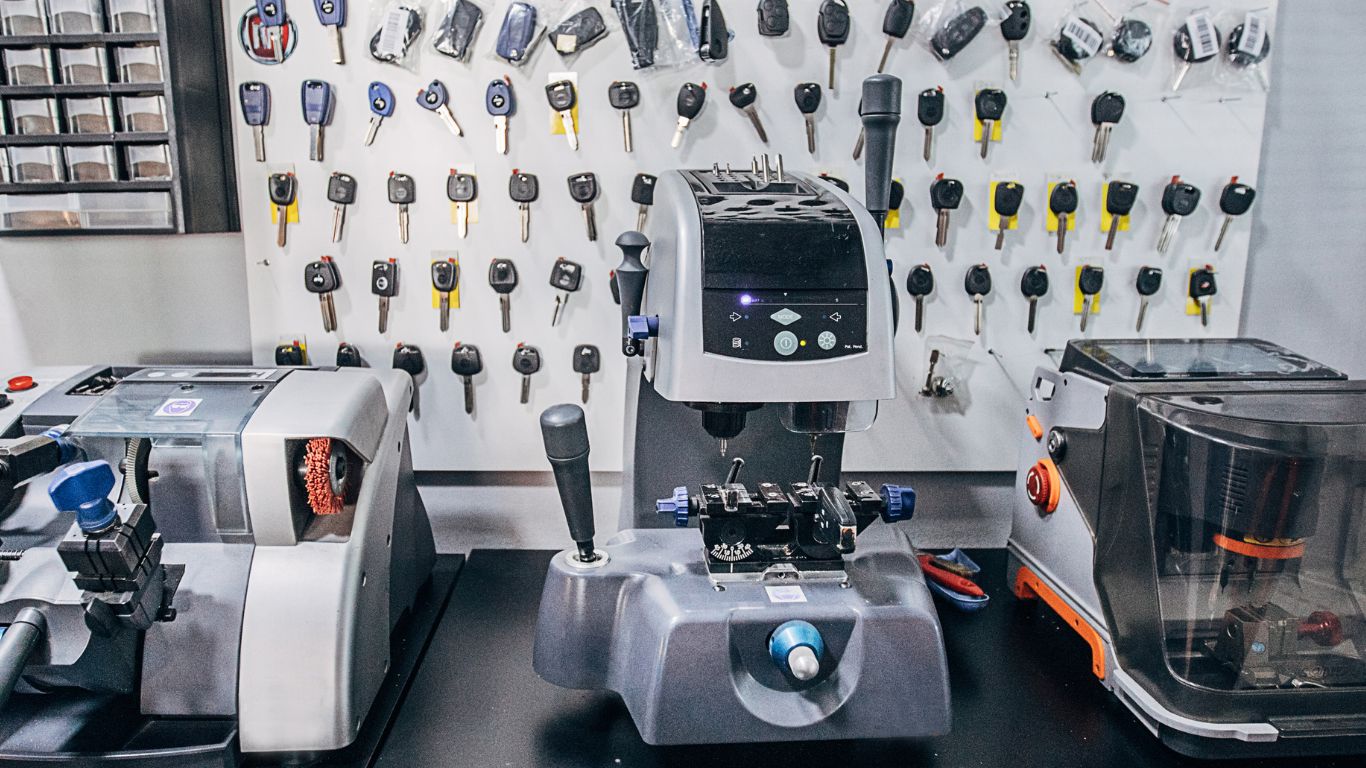
Many locks have a key code stamped on the cylinder, the key bow, or in the original paperwork that came with the lock. That code translates into a specific pattern of cuts. With the right software and a code-cutting machine, a locksmith can produce an accurate working key in minutes, without ever taking the lock apart.
This is the fastest and cleanest method, and it is usually the first thing we check for. It is common with filing cabinet locks, padlocks, safe locks, and some vehicle locks where the code is stored against the VIN.
2. Decoding the lock cylinder
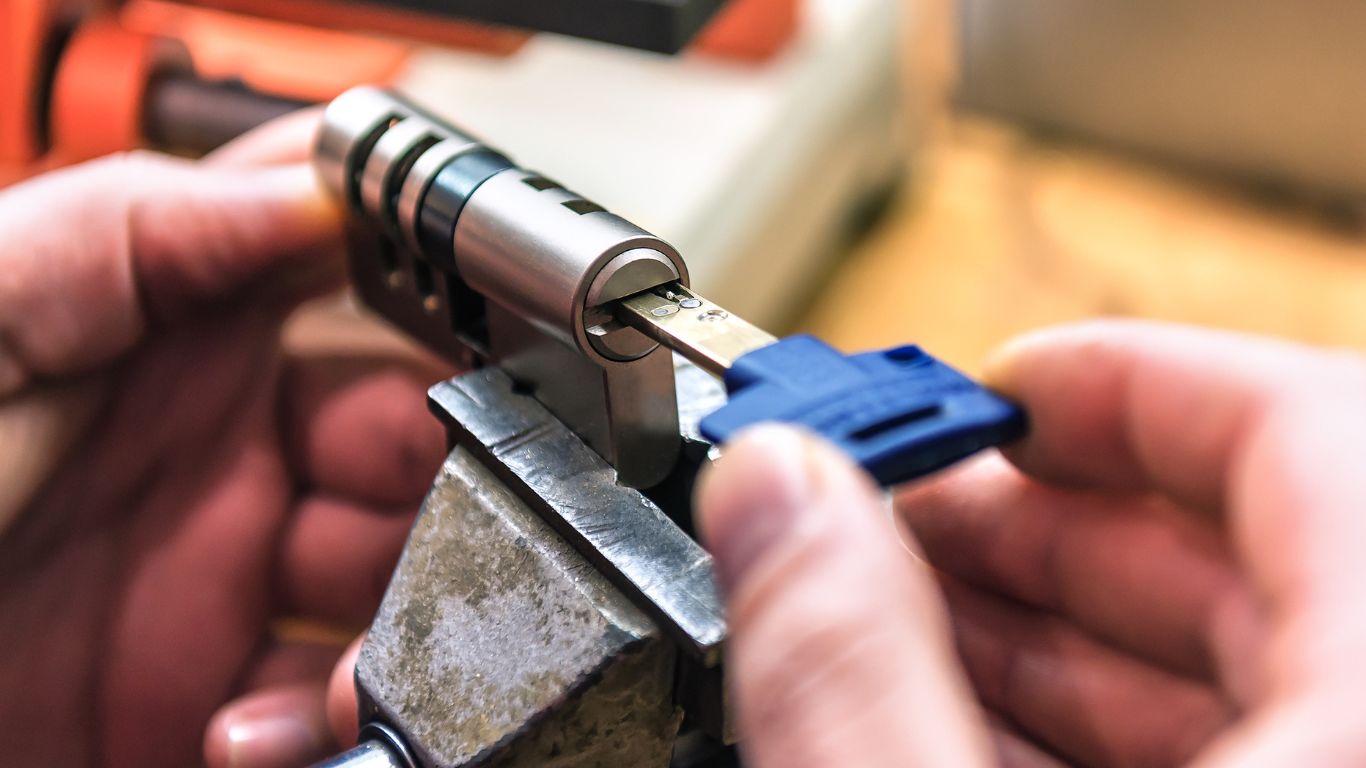
When there is no code available, the next option is to decode the cylinder. The locksmith uses tools to read the depth of the pins or wafers inside the lock, either through the keyway with a scope or by reading the internal components after partial disassembly. Once the cut depths are known, a key is cut to match.
Decoding is highly accurate and quick when the lock is in good condition. It works for most standard household locks, including the front door, back door, and garage locks common across Melbourne homes.
3. Impressioning
Impressioning is the closest thing locksmithing has to a craft skill. A blank key is filed to a fine edge, inserted into the lock, and turned under tension. The pins inside the lock leave faint marks on the blank where they bind. The locksmith files those marks down, reinserts the key, and repeats the process until the key turns the lock.
Done well, impressioning produces a fully functional key without taking the lock apart at all. It is slower than code cutting, and it relies heavily on the technician’s experience, but it is invaluable for older locks where no code exists, and disassembly would be awkward.
4. Disassembling the lock
For high-security or unusual locks, or when impressioning will not work, the locksmith removes and disassembles the cylinder, reads the exact pin or wafer configuration, and cuts a key to that specification. It is the most thorough method, and effectively guaranteed to produce a working key, but it takes longer and requires the lock to be accessible (so it is easier on a deadbolt that can be unscrewed than on a multi-point door lock that is currently locked shut).
What about car keys without the original?
Cars are their own world. A locksmith can almost always make a new car key without the original, but the method depends on the year, make, and security features of the vehicle.
- For older vehicles with simple metal keys, decoding the door or boot lock works the same way as a house lock.
- For most cars from the mid-1990s onwards, the key contains a transponder chip that has to be electronically paired with the car’s immobiliser. This requires programming equipment in addition to key cutting.
- Modern proximity fobs and smart keys can usually be replaced by a qualified automotive locksmith, though specialised vehicles may need to be referred to a dealer.
Many car key jobs can be started using the VIN, which lets the locksmith look up the original key code from the manufacturer. The vehicle still needs to be present for programming, but it does mean a new key can be produced even when no original exists.
When making a new key is not the right call
Cutting a new key restores access, but it does not address security. There are situations where rekeying or replacing the lock is the smarter move:
- You lost the key somewhere, it might be linked back to your address (in a wallet that was stolen, for example, or in a handbag with your driver’s licence).
- You have just moved into a new home and have no idea how many copies of the key are floating around.
- The lock is showing signs of tampering, sticking, or wear.
- The key was held by an ex-tenant, contractor, or former housemate.
In all of these cases, you do not actually want a duplicate of the existing key. You want the lock to stop recognising that old key entirely. That is a rekey or a lock change, not a key cut.
How long does it take, and what does it cost in Melbourne?
Most key-from-scratch jobs are completed on site in 30 to 60 minutes, longer for high-security locks, safes, and cars requiring programming. Pricing varies with the method, the lock type, and whether the job is a callout or done in the workshop.
The figures below are typical Melbourne ranges for a single new key produced without the original. They are guidance only; we always give a firm quote before any work starts.
| Job type | Typical Melbourne range (AUD) | Notes |
|---|---|---|
| Standard house key cut by code or decoded | $130 – $230 | Most pin tumbler front and back door locks |
| Impressioned house key | $180 – $300 | Older locks with no available code |
| Lock disassembly and new key | $200 – $380 | High-security or restricted key locks |
| Padlock or filing cabinet key by code | $90 – $180 | Often done in workshop |
| Older car key (non-transponder) | $150 – $280 | Vehicle must be accessible |
| Transponder car key with programming | $280 – $650 | Varies by make and model |
| Smart key or proximity fob | $450 – $950+ | Late-model vehicles, dealer referral possible |
For a deeper look at how locksmith pricing is built up in Melbourne, including callout fees and after-hours loadings, see our pricing guide.
👉 How much does a locksmith cost in Melbourne?
👉 Do locksmiths charge call-out fees in Melbourne?
What to expect when you call a locksmith for this job
A reputable locksmith will ask a few questions before quoting, and a few more before starting work. None of this is bureaucratic; it protects you (and us) from the obvious risks of cutting keys to a property for the wrong person.
- Proof you live at or own the property. A driver’s licence with the address, a rental agreement, a recent utility bill, or being met on site by the owner or property manager is usually enough.
- The make and model of the lock, if you know it, or a photo. This lets us bring the right blanks and tooling on the first visit.
- For vehicles, the VIN and registration, plus ID, match the vehicle owner.
- Whether the original key was lost in a context that creates a security risk, in which case rekeying may be a better recommendation.
In Victoria, locksmiths operate under the private security licensing framework administered by Victoria Police. Recent reforms have moved the industry to a single-tier licensing system, with the full transition required by mid-2026. Working with a licensed locksmith is not just best practice; it is the legal expectation.
👉 Are all locksmiths licensed in Victoria?
How to avoid being in this situation again
A few small habits remove most of the stress around lost keys:
- Cut a spare as soon as you get a new lock, and store it somewhere off-site (with a trusted neighbour, family member, or in a coded key safe outside the property).
- Photograph the key code on any new lock, padlock, or filing cabinet and store it securely. It makes future replacements faster and cheaper.
- For business premises, keep a master key register so you know who holds what and can rekey quickly when staff change over.
- Consider upgrading to a restricted key system if you are tired of lost keys becoming security incidents. Keys can only be cut with proof of authorisation, which makes uncontrolled copying effectively impossible.
👉 How do factories make keys unique?
When to call
If you have lost the only key to your house, your car, or your business, you do not need to wait until business hours, and you do not need to break a window. A mobile locksmith can come to you, identify the lock, and produce a working key on the spot in most cases. If the situation is genuinely urgent (a child locked inside, a property exposed overnight), that calls for an emergency response rather than a standard booking.
👉 Mobile locksmith vs emergency locksmith
VicLocks provides residential, commercial, and automotive locksmith services across Kew and greater Melbourne, including making new keys when no original is available, rekeying after lost keys, and full lock replacement where security has been compromised. We are licensed under Victorian private security regulations and quote up front before any work begins.
Contact VicLocks today on 0418 397 297 if you have lost your only key and need a new one cut.
Frequently Asked Questions
Can a locksmith really make a house key with no original to copy?
Yes. The most common methods are cutting from a key code, decoding the lock cylinder, impressioning a blank key, or disassembling the lock and reading the pins directly. The right method depends on the lock and the situation, and a trained locksmith will choose the fastest non-destructive option available.
Do I need to prove I own the property?
In almost all cases, yes. A licensed locksmith will ask for identification that links you to the address, or will need to be met by the owner, property manager, or real estate agent. This is a basic security step, not a sign of suspicion.
How long does it take to make a key without the original?
Most residential jobs are completed on site in 30 to 60 minutes. Code cutting is the fastest, impressioning takes longer, and full disassembly or vehicle programming can run beyond an hour, depending on the lock or car.
Is it cheaper to cut a new key or to rekey the lock?
Cutting a new key is usually cheaper than rekeying, but rekeying is the right call when the lost key could be tied back to your property, when keys are held by people who should no longer have access, or when you have just moved in. The cost difference is small compared to the security risk of doing the wrong one.
Can a locksmith make a car key without the original?
Yes, for the great majority of vehicles. Older cars with simple metal keys are straightforward. Modern cars with transponder chips, proximity fobs, or smart keys require programming equipment as well as key cutting, and very recent or specialised vehicles may need to be referred to a dealer.
What if my lock is damaged or worn out?
If the lock is sticking, missing pins, or showing signs of wear, a new key may work briefly but will not solve the underlying problem. In that case, we will usually recommend a rekey or replacement instead of cutting another key into a failing lock.