If you have found yourself here after a quick Google, you are either curious about how keys work, or you’re thinking about replacing your locks and want to understand more about the security of your property.
Either way, it is a good question: how do factories make keys so that each one only works with one specific lock?
In Melbourne, we rely on everything from simple household keys to advanced restricted systems in apartments, offices, and commercial buildings. While the keys themselves might seem basic, the process behind their creation is anything but.
We’re going to explain how keys are designed to be unique, how manufacturers and locksmiths ensure each one is coded correctly, and what this means for your security, whether you’re getting new locks installed or just thinking ahead.
Let’s dive in…
How Are Keys Manufactured in Australia?
Most keys start life in factories as “blanks”, or standardised shapes made from brass or nickel-plated brass, ready to be cut and coded by locksmiths.

In Australia, key blanks are produced both locally and internationally. Well-known brands such as Silca, Keyline, and JMA supply much of the industry, including
locksmiths across Melbourne. These manufacturers produce thousands of key blank profiles to suit different lock types, from front doors to padlocks, filing cabinets, garages, and vehicles.
In Melbourne, it is common to see a mix of:
- Yale-style pin tumbler keys for residential use
- Mortice keys in older homes or heritage buildings
- Restricted system blanks used in strata properties, commercial sites, and government buildings, which cannot be duplicated without authorisation
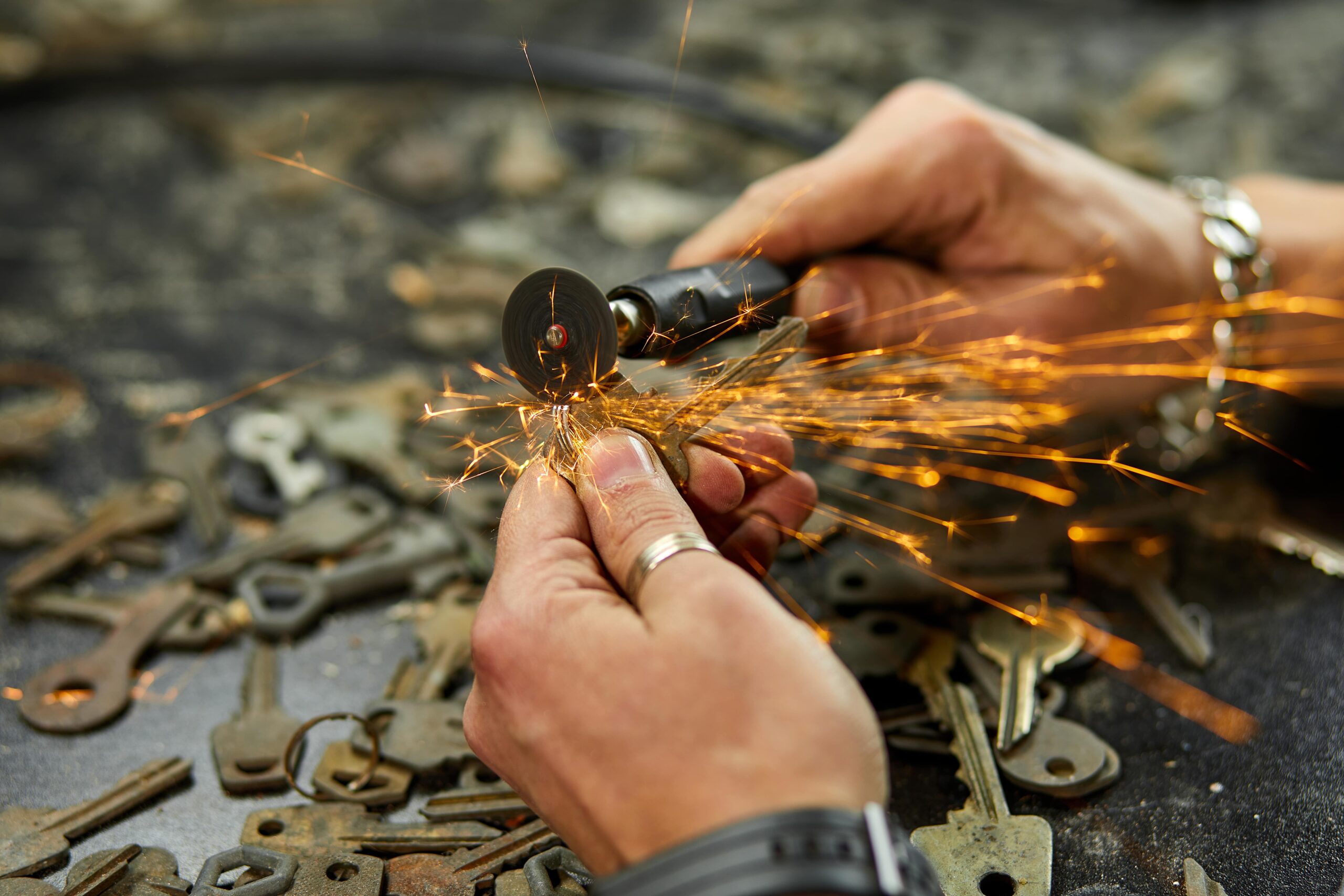
Manufacturing happens at scale, but the final part of the process, the precision work, is handled locally by qualified locksmiths who cut the key and ensure it fits your lock and legal requirements.
What Makes One Key Different From Another?
At a glance, most keys look similar, but look closer, and each key is carefully cut to match a specific internal layout inside a lock. That precision is what makes your key unique.
The Bitting Code
The primary feature that makes one key different from another is the ‘bitting’. The pattern of cuts along the blade of the key. Each cut corresponds to a specific pin height inside the lock. If just one cut is slightly off, the lock will not turn.

For example:
- A typical five-pin lock might have thousands of possible bitting combinations
- A six-pin or seven-pin system increases that number exponentially
These combinations are either chosen manually by a locksmith or generated from a code if the lock is part of a keyed system (like a master or restricted setup).
Keyways and Profiles
In addition to the bitting, keys have unique keyways (the grooves along the side of the blade that allow the key to enter the lock). Keyways prevent one brand or type of key from fitting into another. This means:
- A key cut for a Lockwood lock won’t fit a Gainsborough
- A restricted key will only slide into locks of the same system

Material and Head Shape
Different keys may also use varied materials or have distinctive head designs. Some include:
- Coloured plastic heads for identification
- Laser-etched codes or branding
- Key tags or serial numbers for restricted systems
In short, what makes a key different is not just the visible cuts, but the precise combination of code, profile, and compatibility with your lock. Even tiny variations in a single cut or angle are enough to make a key unique.
How Many Key Combinations Are Possible?
It’s More Than You Might Think.
But Not Unlimited.
One of the most common questions we hear is: “How many different keys are there, really?” The answer depends on the type of lock and the system in use. But yes, there is a limit.
Standard Pin Tumbler Locks
Most Australian residential locks use pin tumbler mechanisms with 5 or 6 pin stacks. Each pin can be set to different heights (commonly 5 to 10 possible positions). The number of unique combinations increases rapidly depending on these two factors.
For example:
- A 5-pin lock with 10 possible cut depths = 100,000 combinations (10⁵)
- A 6-pin lock with the same depth range = 1,000,000 combinations (10⁶)
However, not all combinations are used. Manufacturers avoid patterns that are too similar or mechanically unreliable, which reduces the actual number in circulation.
Real-World Limitations
In practice, the number of available and used combinations is smaller due to:
- Key blanks with restricted bitting ranges
- Avoiding duplicates in multi-property systems
- Manufacturer design constraints and master keying overlap
That is why you might occasionally hear about someone else’s key “almost” working in a different lock. It’s rare, but possible, in large housing estates or older, generic lock systems.
What does this mean about the individuality of keys and can they ever be truly unique?
Can a Key Be Truly One-of-a-Kind?
It’s a fair question: with so many keys in circulation, is yours really one-of-a-kind?
Technically, no key is guaranteed to be absolutely unique, but in practical terms, a well-designed key system makes it highly unlikely that two keys will be the same, especially within a secure environment like a home, business, or strata complex.
Standard domestic keys may share similar bitting patterns over time, especially in large hardware chain systems where combinations can repeat. But when designed by a professional locksmith, particularly under a restricted or master key system, each key is assigned a distinct combination and tracked for accountability.
One-of-a-Kind vs High Security
It’s important to separate the idea of a “one-of-a-kind key” from a secure key. What really matters is:
- Can the key be duplicated without permission?
- Is the lock resistant to picking or manipulation?
- Does your system have oversight and record-keeping?
Where Are Keys Cut in Melbourne? Factory or Onsite?
(As above) Key factories (often overseas or interstate) produce the raw, uncut blanks shaped to fit specific lock types. These blanks are then supplied to local locksmiths, who handle the precise cutting that matches your lock.
Where Are Keys Actually Cut
In Melbourne, key cutting is typically done in:
- Locksmith workshops (walk-in services for home, car, and padlock keys)
- Mobile locksmith vans, equipped with portable key-cutting machines (like ours!)
- On-site visits, where a locksmith cuts and tests keys during installation or service
- Hardware stores, although quality and compatibility can vary
For most residential and commercial keys, the cutting is local, fast, and accurate.
rom factory-made blanks to expertly cut bitting codes, every key is shaped to serve a specific lock, with safeguards in place to reduce duplication, improve access control, and protect your property.
Whether you are considering new locks, managing a restricted key system, or simply curious about how your home key was made, understanding how keys are manufactured and made unique is the first step in staying secure.
If you need help with key cutting, restricted systems, or upgrading your locks in Melbourne, get in touch with our
expert locksmith team. We’re here to help.