- November 6, 2026
- |Home Safety, Rules & Regulations
- | 0
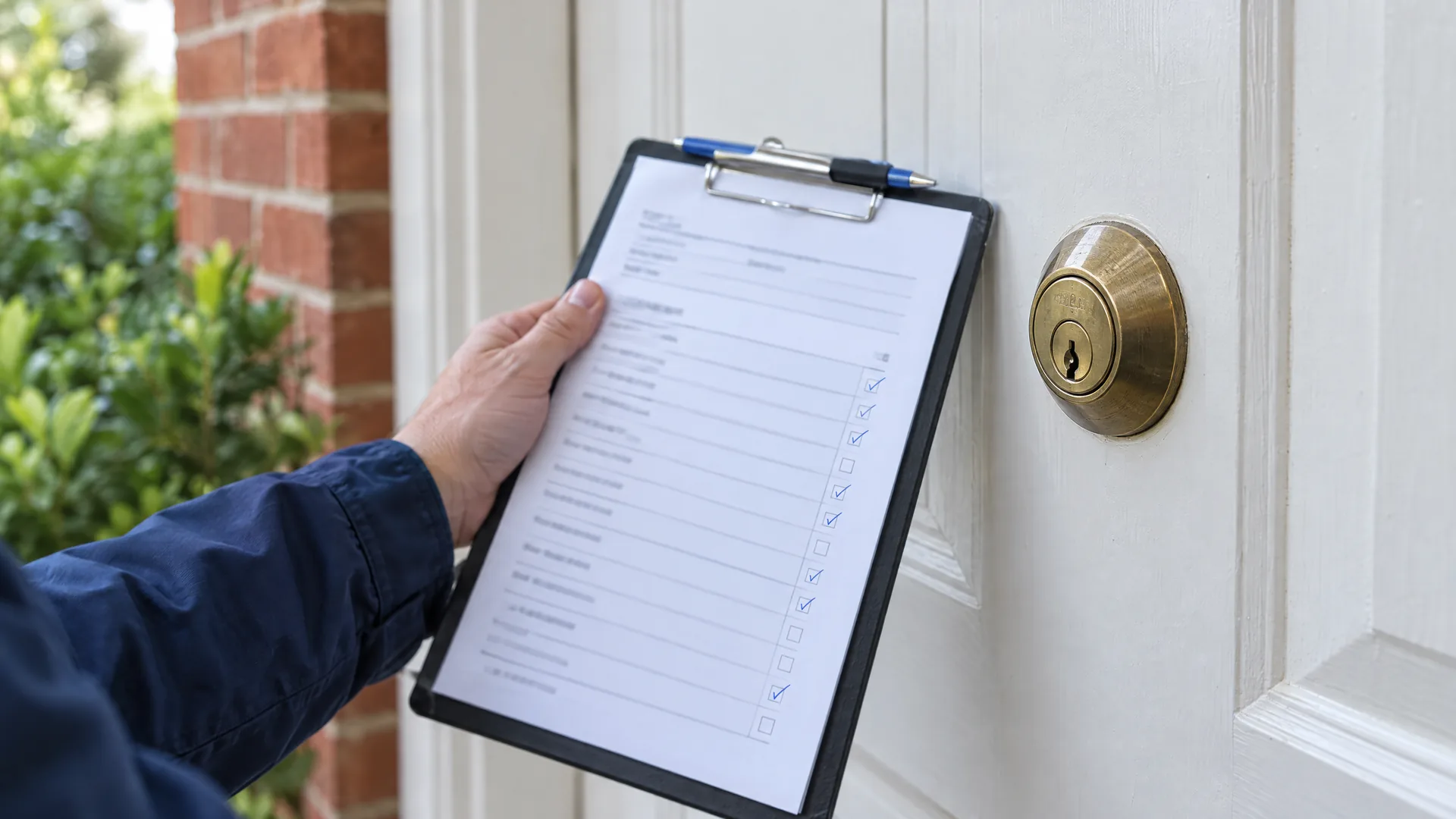
From 13 October 2026, every Victorian rental provider must keep records showing the property meets the rental minimum standards, and locks are one of those standards. For locks, that means proof that each external entry door has a working deadlock (or an allowed alternative) and each window that opens can be latched shut, when the property is advertised and before the renter moves in.
As a mobile locksmith in Kew, we check and fix rental locks for landlords and property managers between tenancies. This guide sets out what the lock standard says, what changed on 13 October and the records we’d suggest keeping for every door and window.
It’s written for rental providers and agents. If you’re renting and a lock isn’t working, the section on what happens when a lock doesn’t meet the standard explains your options.
What changed for Victorian landlords on 13 October 2026?
Two record-keeping duties started. Rental providers must keep records showing the property met the minimum standards before the renter moved in, and providers or agents who advertise a property must keep records showing it met them when it was advertised. Consumer Affairs Victoria (CAV) can ask to see those records.
Meeting the standards isn’t new. Rental properties have had to meet them before move-in since 29 March 2021, and since 25 November 2025 it’s been an offence to advertise a property that doesn’t. What’s new is the paper trail: CAV’s summary of the new rental laws lists records showing compliance among the changes in effect from 13 October 2026. The duties sit in the Residential Tenancies Act 1997:
- Keep move-in records. Under section 65C, a rental provider must keep records sufficient to show the property complied with the minimum standards on or before the day the renter moved in.
- Keep advertising records. Under section 65E, a provider or agent who advertises or offers a property to let must keep records showing it met the standards at that time.
- Hand them over when asked. Under sections 65D and 65F, the records must be produced as soon as practicable if the Director of Consumer Affairs Victoria asks. Failing to do so carries a maximum penalty of 150 penalty units for an individual and 750 for a company.
The Act lets the Director publish guidance on which records are sufficient. At the time of writing, CAV’s minimum standards page doesn’t list specific records, so the suggestions further down are a locksmith’s practical view, not an official checklist.
The lock rules haven’t changed. What’s changed is that you now need to be able to prove you met them.
What do Victoria’s rental minimum standards say about locks?
External entry doors that can take a deadlock must have a functioning one, and in Victoria’s rental rules a deadlock means a deadlatch with at least one cylinder. Doors that can’t take one need at least a lock that works with a key from outside and opens from inside, with or without a key. Every external window that opens needs a functioning latch.
The rules come from section 70 of the Act and Schedule 4 of the Residential Tenancies Regulations 2021. Here’s how they apply door by door and window by window.
| Door or window | What’s required | Exceptions |
|---|---|---|
| External entry doors that can take a deadlock | A functioning deadlock: a deadlatch with at least one cylinder | Screen doors fitted to an external door. A door where another law requires a different lock or device. A door that can’t be reached because of another security barrier, such as a locked building entrance or gate |
| External entry doors that can’t take a deadlock | At least a lock operated by a key from outside that can be unlocked from inside, with or without a key | Public lobby doors that open onto common property. Heritage-registered properties where a permit to alter the door has been refused |
| External windows that open | A functioning latch that secures the window against entry from outside. The regulations note that a window lock or bolt meets this | Windows that don’t open |
| Windows that can be fitted with a lock | Locks, under section 70 of the Act | Windows that can’t take a lock |
A deadlatch locks itself when the door closes, and it’s built so the latch can’t simply be pushed back from outside. As CAV’s locks and security page points out, it doesn’t have to be a lock that needs a key to open from the inside, and CAV doesn’t recommend locks that do. If you’re unsure what’s on your doors now, our guide to what kind of locks are used in Australian rental properties walks through the common types, and deadbolts vs standard locks explains the difference in security.
What records should landlords keep for locks?
Keep dated evidence that each external door lock and opening window latch worked when you advertised the property and again before the renter moved in. A door-by-door lock schedule, dated photos and itemised invoices for lock work are the simplest records to keep, and they’re easy to hand over if CAV asks.
- A lock schedule. One line for every external door and opening window, with the lock type and whether it worked on the day you checked. There’s a template below.
- Dated photos. A photo of each lock that shows which door or window it’s on. Most phones save the date with the photo.
- Itemised invoices. Ask your locksmith to list each lock fitted, repaired or rekeyed and which door or window it’s on. “Locks serviced” on an invoice won’t prove much later.
- Condition reports. Note on the entry condition report that the locks were checked and working, and keep the signed copy.
- Exception notes. If a door doesn’t have a deadlock because it can’t take one, sits behind a locked building entrance or is covered by a refused heritage permit, write down why and keep any letters from the owners corporation or council.
- Repair records. Keep each lock repair request, the date you heard about the fault and the date it was fixed.
- A key register. Record how many keys and fobs each renter was given. It isn’t part of the lock standard, but you’ll need it at the end of the tenancy and when deciding whether to rekey.
If a property manager looks after the property, check which of these they keep for you. The advertising records duty applies to agents too, but the move-in records duty in section 65C sits with the rental provider. CAV’s rental minimum standards checklist for rental providers covers all 15 standards and works well alongside a lock schedule.
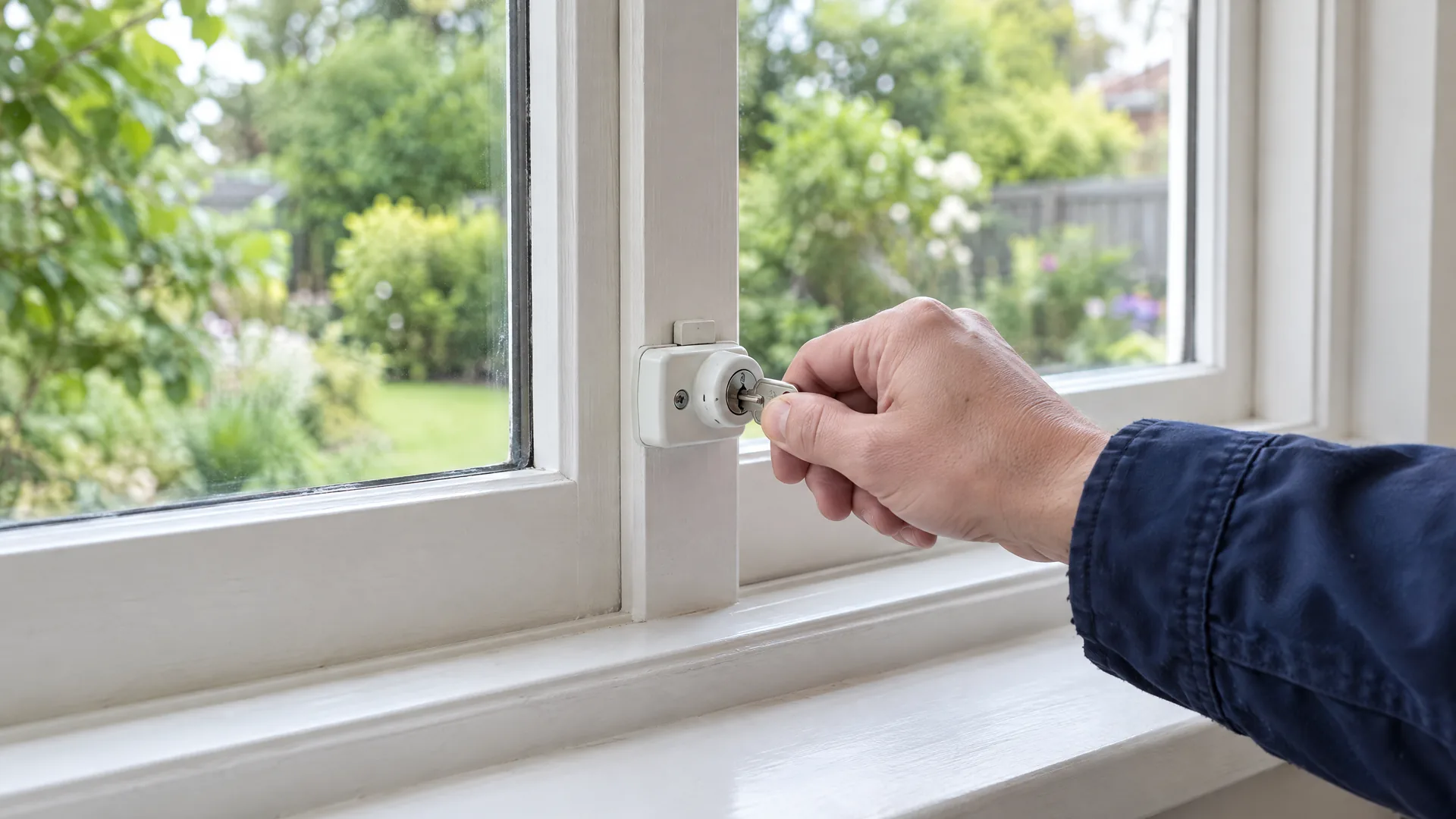
A simple lock record template
Copy this into a spreadsheet and keep one per property. Add a new row each time you check a lock rather than overwriting the old one, so the history stays intact. The rows below are examples.
| Door or window | Lock type | Working? | Date checked | Checked by | Photo or invoice |
|---|---|---|---|---|---|
| Front door | Deadlatch with key cylinder | Yes | 2 Nov 2026 | Owner | Photo 1 |
| Back door | Deadlatch with key cylinder | No, latch not catching. Strike plate adjusted | 2 Nov 2026 | Locksmith | Invoice |
| Living room sliding door | Keyed sliding door lock | Yes | 2 Nov 2026 | Owner | Photo 2 |
| Bedroom 1 window | Keyed window lock | Yes, key left in kitchen drawer | 2 Nov 2026 | Owner | Photo 3 |
| Bathroom window | Window latch | Yes | 2 Nov 2026 | Owner | Photo 4 |
When should you check the locks?
Check every external door and opening window before you advertise, again just before the renter moves in, and whenever a lock is repaired, replaced or rekeyed. The first two checks match the two points the law asks you to show compliance.
- Before you advertise or offer the property. It’s an offence to advertise a property that doesn’t meet the minimum standards.
- Just before move-in day. Section 65A says the property must comply on or before the day the renter moves in. If a few weeks have passed since the ad went up, check again.
- After any lock work. Update the lock schedule the day the work is done.
- At the end of a tenancy. Count the keys back in and decide whether to rekey before the next renter. Our guide to rekeying locks after tenants move out covers when it’s worth it.
If your current renters moved in before 13 October 2026, CAV’s minimum standards page says that from that date all rental providers must keep records showing the property meets the standards. We’d do a lock check now and record it, so you’re not relying on memory if a question comes up.
What counts as a functioning deadlock?
The law doesn’t spell it out in detail. In our experience, a lock is doing its job when the key turns smoothly from outside, the door opens easily from inside, and the latch catches every time the door closes. A lock that needs a shove, a lift or a particular knack is a lock that’s about to fail.
- The door closes and latches without being lifted or pushed.
- The key goes in, turns and comes out smoothly from outside.
- The door opens from inside the way it’s meant to.
- Once the lock is set, the outside handle won’t open the door.
- Every window that opens latches shut, and keyed window locks have a key at the property.
- No lock has been painted over, taped or wedged.
The faults we find most at changeover are doors that have dropped so the latch misses the strike plate, worn cylinders with sticky keys, window latches lost to a paint job, and window lock keys that left with the last renter. A key that’s started to stick is an early warning, which we explain in key stuck or broken in a lock, and regular care is covered in how to maintain door locks and prevent failures.
What happens if a rental lock doesn’t meet the standard?
A failure to meet the minimum standards is an urgent repair under the Residential Tenancies Act, so the rental provider must have it fixed immediately once told. If the provider doesn’t respond, the renter can arrange the repair themselves if it costs no more than $2,500, and the provider must pay them back within 7 days.
That’s set out in CAV’s guide to repairs in rental properties, which also lists any fault that makes a property unsafe or insecure as an urgent repair. There are penalties as well: letting a renter move into a property that doesn’t meet the standards carries a maximum of 60 penalty units for an individual under section 65A.
If you’re renting and an external door or window lock isn’t working, contact your rental provider or agent straight away on the emergency number you were given, then confirm the request in writing. Changing a lock yourself is a separate question with its own consent rules, which we cover in changing the locks and the law.
A broken lock on an external door isn’t a job for the next routine inspection. Under the Act, it’s an urgent repair.
How should property managers handle locks across several rentals?
Use the same lock schedule for every property, keep it with the condition reports, and update it at every changeover. For apartments, note which locks are on the building’s master key system, because a renter needs the rental provider’s consent to change those.
- Use one format. The same columns for every property, so anyone in the office can read a schedule at a glance.
- Keep records per property, not per tenancy. A lock fitted three tenancies ago is still part of this year’s compliance.
- Mark master key system locks. Section 70 of the Act says a renter needs the rental provider’s consent to change a lock in a master key system, and the provider can’t unreasonably refuse. Our post on changing locks in an apartment on a master system explains how those systems work.
- Record the security barrier. If a unit’s front door sits behind a locked building entrance, note it, because that’s one of the listed exceptions.
- Book lock checks with changeovers. If a locksmith is already rekeying at the end of a tenancy, ask them to check every door and window lock on the same visit.
How can a locksmith help landlords meet the lock standard?
A locksmith can check every external door and opening window, fix or replace what’s failing, rekey between tenancies and give you an itemised invoice that lists each lock by door and window. That invoice becomes part of your records.
We fit deadlocks and door locks, repair and install window locks, cut keys and rekey for landlords and property managers in Kew, Kew East, Hawthorn and Balwyn. Whoever you use, check their credentials first. We explain how licensing works for Victorian locksmiths in are all locksmiths licensed in Victoria?
Frequently asked questions
Do Victorian rental properties need a deadlock on every door?
Every external entry door that can take a deadlock needs a functioning one, apart from screen doors. Doors that can’t take a deadlock need at least a lock that works with a key from outside and opens from inside. Internal doors aren’t covered by the lock standard.
Do windows in a Victorian rental need key locks?
Not necessarily. The minimum standard is a functioning latch on every external window that opens, and the regulations say a window lock or bolt meets it. Section 70 of the Act also requires locks on windows that can take one, so it’s worth asking a locksmith which of your windows can.
What’s the difference between a deadlock and a deadlatch?
In Victoria’s rental rules, a deadlock means a deadlatch with at least one cylinder, so for a rental the two mean much the same thing. A deadlatch locks itself when the door shuts. It doesn’t have to need a key to open from inside, and CAV doesn’t recommend locks that do.
How long should landlords keep minimum standards records?
The Act doesn’t set a period. It says the records must be sufficient to demonstrate compliance, so we’d keep them for the whole tenancy and well after it ends. Your property manager, accountant or lawyer can advise on a fixed period for your situation.
Do landlords have to change the locks between tenants in Victoria?
The minimum standards don’t require it. Rekeying between tenancies is still the sensible default, because you rarely know how many copies the last renter made. We cover the reasons in our guide to rekeying locks after tenants move out.
Does the record-keeping rule apply if my renter moved in before 13 October 2026?
CAV says that from 13 October 2026, all rental providers must keep records showing the property meets the minimum standards. If you don’t have records from before your current renter moved in, do a lock check now and record it, and ask CAV or a lawyer if you’re unsure what applies to your tenancy.
Need your rental locks checked in Kew or nearby?
Getting the locks right is one of the simpler parts of the minimum standards: most fixes are a strike plate adjustment, a new cylinder or a window latch. If you own or manage a rental in Kew, Kew East, Hawthorn or Balwyn, call VicLocks on 0418 397 297. We’re a fully mobile locksmith, so we come to the property in a vehicle stocked with tools, locks and key-cutting equipment, and most jobs are sorted in a single visit.
This guide is general information only, current at October 2026, and is not legal advice. Rental laws change, so check Consumer Affairs Victoria for the latest rules and get advice from a lawyer or property manager about your own situation.