- July 17, 2026
- |Locksmith Services
- | 0
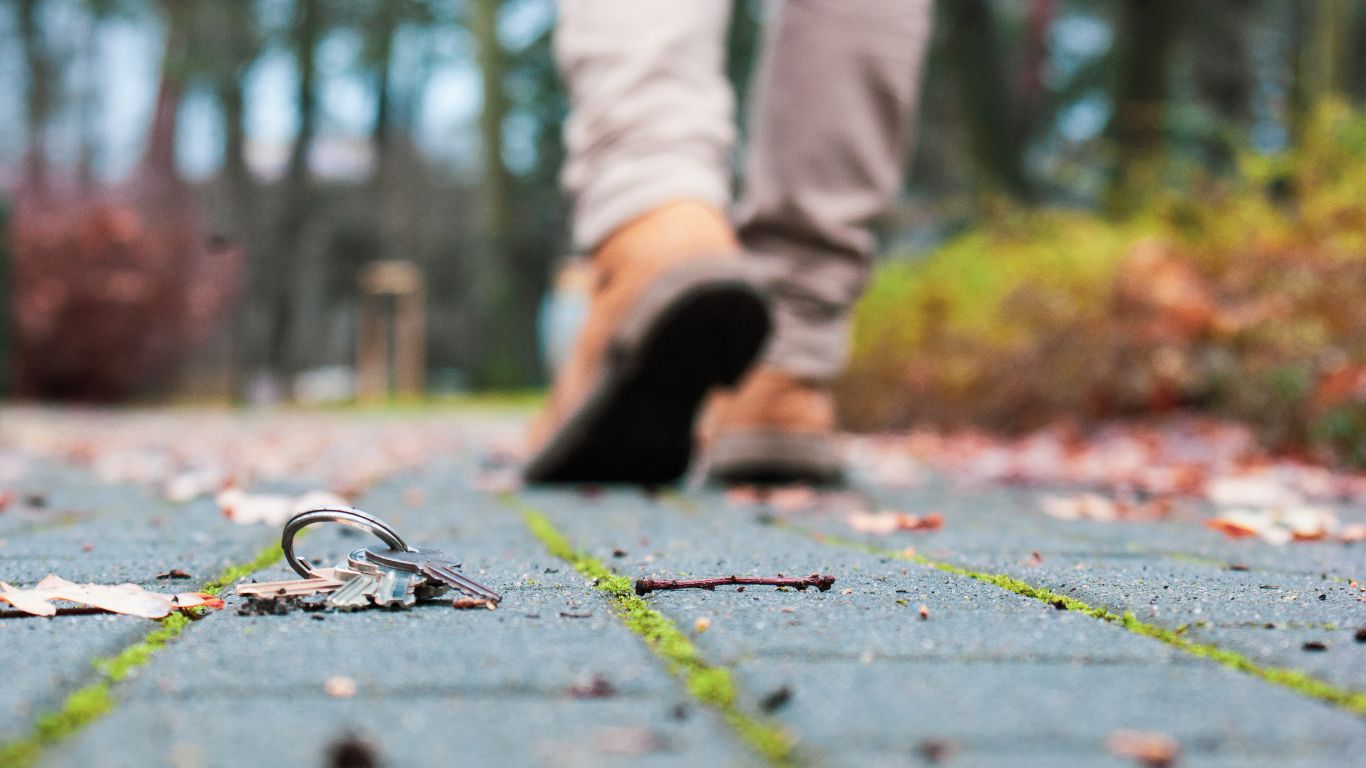
Have you ever found yourself searching the house for your keys, rummaging through drawers and retracing your steps? You are far from alone. Losing your keys is one of those small disasters that can throw out your whole morning.
As locksmiths, a good share of our callouts come down to lost keys, so we wanted to put together a practical list of ways to stop it happening. From smart trackers to simple habits, here are ten that actually work, and at the end, what to do if you have already lost a set.
The top 10 ways to prevent losing your keys
- Establish a dedicated key spot. Designate one place in your home, a hook or tray near the front door, and put your keys there the moment you walk in. Most lost-key panic comes from having no default home for them.
- Use a key tracker. A small Bluetooth tracker attaches to your keyring and lets you ring your keys from your phone, or see where you last had them. It is the single most effective gadget for chronic key-losers. See the comparison below for which one suits your phone.
- Build a leaving routine. Make it a habit to check for your keys before you leave home, the office or a cafe. A quick, consistent pat-down catches a huge proportion of would-be losses.
- Attach a bright or unique keychain. A bold, distinctive keychain makes your keys easier to spot on a bench, in a bag or down the side of the sofa.
- Make them big and bulky. The larger and heavier your keyring, the harder it is to lose and the more obvious it is to feel in a pocket or bag.
- Use smart locks at home. A smart lock lets you enter with a code, phone or fingerprint, reducing your reliance on a physical key altogether. We have covered how they work, and whether a locksmith can help if one fails, here.
- Check the health of your key accessories. Make sure keyrings and split rings are in good condition and not worn, since a failing ring is a quiet, common way to lose a key without noticing.
- Keep a spare key in a secure place. A spare with a trusted neighbour or family member is a lifesaver if you lose your main set. Just do not leave it under the mat, which is the first place an intruder looks.
- Add useful accessories to your keyring. Attaching something you reach for often, like a small torch or a multi-tool, means you handle your keys more deliberately and notice sooner if they are missing.
- Consider wearable keys. Keeping keys on your person, clipped to a belt loop or a lanyard, keeps them with you rather than left on a random surface.
👉 Can a Locksmith Open a Smart Lock?
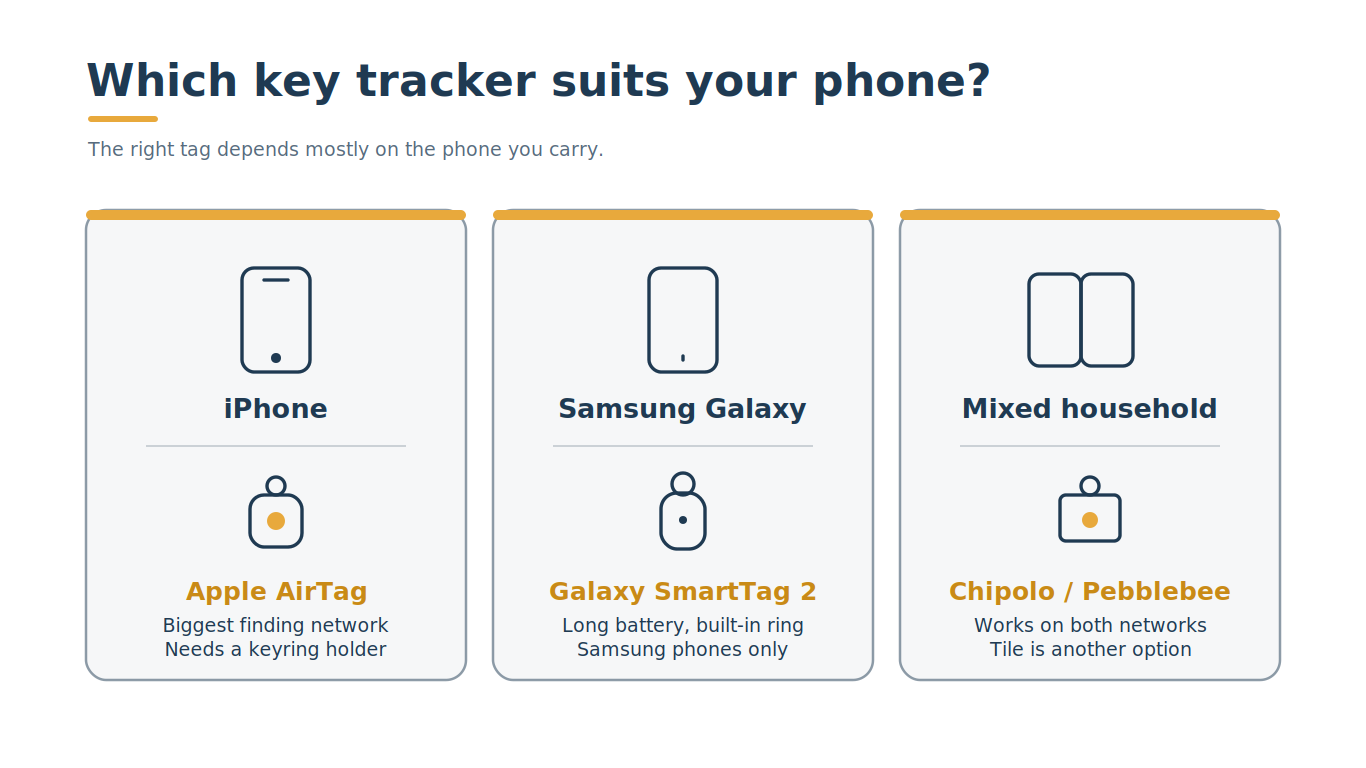
Which key tracker suits your phone?
If you only take one tip from this list, make it a tracker. The right one depends mostly on the phone you carry, because that determines which finding network you can tap into.
| Tracker | Works with | Best for |
|---|---|---|
| Apple AirTag (2nd gen) | iPhone (Apple Find My) | iPhone users who want the largest finding network and precise, arrow-guided finding. Needs a keyring holder. |
| Samsung Galaxy SmartTag 2 | Samsung Galaxy phones | Samsung owners, with a long battery life and a built-in keyring hole. |
| Chipolo or Pebblebee | iPhone and Android (Apple Find My or Google Find Hub) | Mixed households, or anyone who wants one tag that works across both platforms. Loud alarms and a built-in ring. |
| Tile | iPhone and Android (Tile’s own network) | Cross-platform users happy with Tile’s app, though some features sit behind a subscription. |
The quick rule: iPhone owners are best with an AirTag, Samsung owners with a SmartTag 2, and mixed households with a Chipolo or Pebblebee that works on both networks. Any of them turns a twenty-minute hunt into a thirty-second one.
What to do if you have already lost your keys
Prevention is ideal, but if the keys are already gone, here is the sensible order of things.
- Retrace and check the obvious spots first, including bags, pockets, and the last places you visited.
- If they are genuinely lost or were stolen, treat your locks as compromised. Whoever has your keys may also know where you live, so the safe move is to have your locks rekeyed or changed so the missing keys no longer work.
- If you are locked out, a mobile locksmith can get you back in, usually without any damage.
- If your keys were stolen, report it and consider whether it affects your home insurance.
Rekeying is usually the most cost-effective fix, since it keeps your existing hardware while making the lost keys useless:
👉 Do I Need to Rekey or Replace My Locks After Moving House?
👉 How Much Does a Locksmith Cost in Melbourne?
Never lose sleep over lost keys again in Kew or greater Melbourne
Whether it is adopting a tracker and a smart lock, or just building the simple habit of a dedicated key spot, the trick is choosing the methods that fit your lifestyle. And if the worst happens, it is not the end of the world.
VicLocks works across Kew and greater Melbourne for lockouts, rekeying, lock changes and smart lock advice, so a lost set of keys is a quick fix rather than a crisis. For broader peace of mind, our residential team can help you tighten up home security overall:
👉 Residential Security Services
👉 Emergency Locksmith in Kew
Contact VicLocks today or call 0418 397 297, whether you want advice on prevention or you are standing outside a locked door right now.
Frequently Asked Questions
What should I do if I lose my keys?
Check the obvious places first, then treat lost or stolen keys as a security risk. Because whoever finds them may be able to work out where you live, the safe step is to have your locks rekeyed or changed so the missing keys no longer work. If you are locked out in the meantime, a mobile locksmith can let you in.
Are key finders worth it?
For anyone who regularly misplaces their keys, yes. A tracker costs around $30 to $50, sets up in under a minute, and lets you ring your keys or see where you last had them. It pays for itself the first time it saves you a missed appointment or a locksmith callout.
What is the best key tracker?
It depends on your phone. iPhone users are best served by an Apple AirTag, Samsung owners by a Galaxy SmartTag 2, and mixed households by a cross-platform tag like Chipolo or Pebblebee that works on both Apple and Google's networks. Tile is another cross-platform option.
Should I hide a spare key under the mat?
No. Under the mat, in a pot plant or above the door frame are the first places an intruder checks. Leave a spare with a trusted neighbour or family member instead, or use a proper key safe if you need one on site.
How do I stop losing my keys for good?
Combine a habit and a gadget. Give your keys one dedicated home by the door, check for them before you leave, and add a Bluetooth tracker as a backup. That combination removes almost every common way keys go missing.