- May 27, 2026
- |Locksmith Services, Smart Locks
- | 0
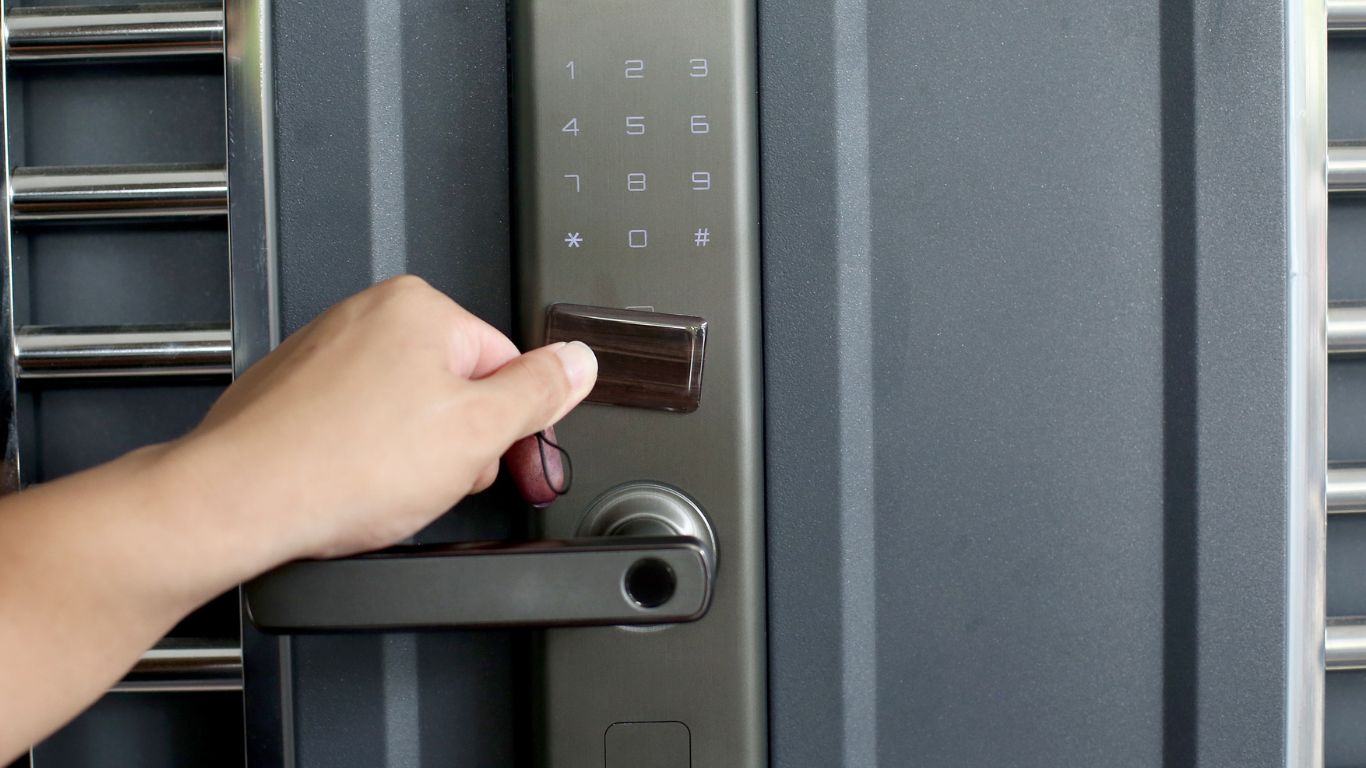
Smart locks are everywhere now: keypad entry, fingerprint readers, app control, the lot. The problem most Melbourne homeowners face isn’t choosing between features. It’s discovering, often after the lock has already arrived in the post, that the thing simply doesn’t fit an Australian door.
This happens because a large share of the smart locks sold online are designed for the American market, where the standard front door uses a separate cylindrical latch and deadbolt.
Australian doors are often different. Most use a mortice lock, a single lock body recessed into the edge of the door, and the measurements that matter here are not the ones an imported lock is built around.
The good news: plenty of smart locks are built specifically for Australian doors, and most existing Australian doors can take one with the right model and a proper install. This guide walks through what actually determines compatibility, what the connectivity options mean in plain terms, and how to avoid buying a lock you can’t fit.
Why so many smart locks don’t fit Australian doors
Australian residential doors are generally built around locksets that comply with AS 4145.2, the Australian Standard for locksets.
In practice, that means two common configurations: a mortice lock (a one-piece lock body, combining the latch and deadbolt, recessed into the door edge) and a Euro cylinder system (a replaceable cylindrical lock core, common in apartments and newer builds).
Imported smart locks, particularly the cheaper ones aimed at the US market, are built for a different setup entirely. They assume a separate deadbolt with a specific cutout, and they often don’t account for the lever-handle hardware that’s standard here. Drop one of those onto a typical Australian mortice door, and the holes don’t line up, the spindle is the wrong length, and the handing is wrong.
So the first rule of choosing a smart lock in Australia is simple: buy one designed for the Australian market, or confirm compatibility with your exact door before you order. Brand reputation matters less than fitment.
The three measurements that decide compatibility
Before you look at a single feature, measure your door. Three numbers decide whether a given smart lock will physically fit.
1. Door thickness
Most smart locks are designed for doors between 35 mm and 50 mm thick. Many Australian timber entry doors sit comfortably in that range, but solid period doors and some custom doors can be thicker, and very slim aluminium-framed doors can be thinner. A door outside the supported range may need spacers or may simply not be compatible. Measure the door edge with a tape or vernier before buying.
2. Backset
The backset is the distance from the edge of the door to the centre of the lock cylinder or spindle. This is the measurement that catches people out most often. Australian mortice locks commonly use a 60 mm backset, but other sizes exist, and sliding and narrow-stile doors use much smaller backsets (around 28 mm to 35 mm). If the smart lock’s backset doesn’t match your door, the handle ends up too close to or too far from the edge, and it won’t sit correctly. Good Australian smart lock suppliers offer multiple backset options or a calculator to match your door.
3. Mortice body length and width
If you’re replacing or working around an existing mortice lock, the new lock body has to fit the pocket already cut into the door. Standard Australian mortice bodies are generally 160 mm to 180 mm long and no more than about 30 mm thick. Imported “wide-body” locks (often over 60 mm wide, common in some overseas markets) won’t fit an Australian mortice pocket without major modification to the door.
The Australian-specific gotcha: screen doors
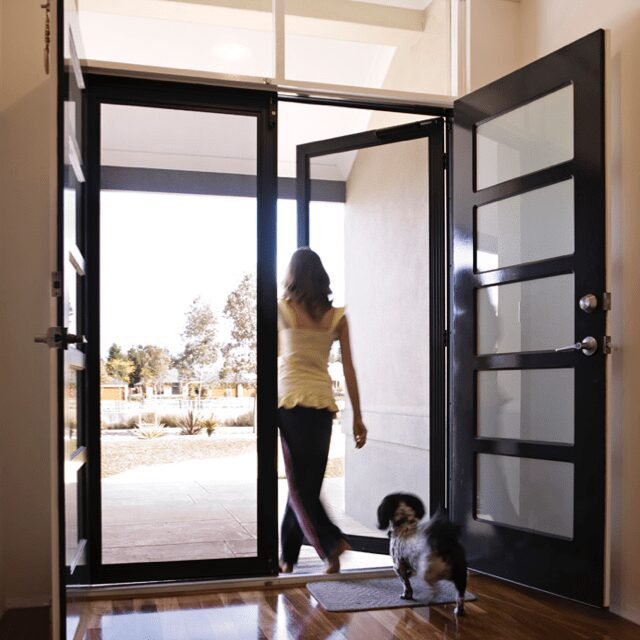
Here’s a constraint almost every overseas buying guide ignores, and one that trips up a lot of Melbourne homeowners. Many Australian homes have a security screen door fitted directly in front of the main entry door, with only a narrow gap between the two.
A chunky smart lock with a thick external escutcheon (the plate that sits on the outside of the door) may physically collide with the screen door when it’s closed, or leave too little clearance to operate the keypad.
If you have a screen door, measure the gap between it and your entry door, and look specifically for a slim-profile smart lock.
Some Australian manufacturers make low-profile models as narrow as around 30 mm deep specifically to solve this problem.
Connectivity: what Wi-Fi, Bluetooth, Zigbee and Matter actually mean
Once you’ve confirmed a lock will physically fit, the next decision is how to connect it. This is where the marketing gets noisy, so here’s the plain-English version of each option.
- Bluetooth. The lock talks to your phone over a short range (roughly 10 metres). It works without internet and without a hub, but you have to be near the lock to manage it. No remote access from work or while away. Fine for a basic keyless front door; limiting if you want to let someone in remotely.
- Wi-Fi. The lock connects straight to your home router, so you get remote access and notifications from anywhere with no separate hub. The trade-offs are higher battery drain (Wi-Fi is power-hungry) and reliance on your home internet being up.
- Zigbee / Z-Wave. Low-power mesh protocols that need a compatible hub. Reliable and battery-friendly, but they tie you to a particular smart-home ecosystem and an extra piece of hardware. For locks specifically, these are becoming less common as the market shifts.
- Matter (usually over Thread). The newer open standard designed so a lock works across Apple Home, Google Home, Amazon Alexa, and Samsung SmartThings at once, with local control. For a brand-new purchase in 2026, a Matter-capable lock is the most future-proof option, though it typically needs a Matter controller or Thread border router in your home to unlock the smart features.
For most homeowners who just want keyless entry and the ability to check the door from their phone, a Wi-Fi or Matter-capable lock hits the sweet spot.
If you don’t care about remote access at all, a Bluetooth lock is cheaper and perfectly secure for what it does.
Access methods: how you’ll actually open the door
Modern smart locks offer a stack of entry methods. More isn’t always better; pick the ones you’ll use.
- PIN keypad. The workhorse. Easy to give a temporary code to a cleaner, tradie, or guest, then delete it later.
- Fingerprint. Fast and convenient for the household. Reliability varies between models and can drop in very wet or cold conditions, so it’s best as one option among several rather than the only one.
- App / Bluetooth eKey. Unlock from your phone, and send a digital key to family members.
- RFID card or fob. Useful for kids or older family members who find a phone or PIN fiddly.
- Mechanical key override. The one to insist on. A physical key backup means a flat battery or a software glitch never locks you out of your own home. Avoid any lock that has no mechanical override.
What to check before you buy: a quick comparison
Here’s the buying checklist in a single view. If a lock fails on the first three rows, the rest doesn’t matter, because it won’t fit.
| What to check | Why it matters | Good answer for an Australian door |
|---|---|---|
| Door thickness | The lock has to clamp the door correctly | Lock supports your measured thickness (most cover 35–50 mm) |
| Backset | Sets how far the handle sits from the door edge | Matches your door (commonly 60 mm; less for sliders and narrow stiles) |
| Mortice / cylinder type | Has to fit the existing lock pocket or cylinder | Australian mortice or Euro cylinder compatible, not a wide overseas body |
| Screen door clearance | A thick lock can foul a screen door | Slim-profile model if you have a screen door close to the entry |
| Connectivity | Determines remote access and ecosystem fit | Wi-Fi or Matter for remote control; Bluetooth if local-only is fine |
| Mechanical key override | Backup if the battery dies or software fails | Yes, always |
| Weather rating | Exterior doors cop sun and rain | An IP weather rating suited to an exposed Melbourne entry |
| Local support / stock | Warranty and spare parts when something goes wrong | Australian supplier with local support and AS 4145-aware fitment |
Renting or living in an apartment? Read this first
If you rent, you generally can’t permanently modify the door without the rental provider’s consent, and changing a lock has its own rules in Victoria.
A retrofit smart lock that fits over the existing internal thumb-turn (without replacing the whole lock) is often the renter-friendly option, because it leaves the original hardware intact.
Even so, check your agreement and get consent before fitting anything.
For apartments and strata properties, an external smart lock may interact with a building master key system or owners corporation rules.
Confirm what’s allowed before you buy, since a lock change on a master-keyed door can affect the whole system.
👉 When to change or rekey your locks
Why professional installation is worth it
Plenty of smart locks are sold as DIY, and for a straightforward like-for-like swap on a compatible door, a confident homeowner can manage. But the failure modes are expensive: a misaligned strike means the lock won’t engage properly, a wrong-backset install leaves the handle sitting awkwardly, and a poorly fitted external door is a security gap rather than an upgrade.
A licensed locksmith brings three things to the job: confirming the lock actually suits your door before anything is cut or drilled, fitting it so the latch and strike align cleanly, and making sure the mechanical override and the rest of your door’s security still work as they should. In our experience, the most common smart lock callout is a homeowner who bought online, found it didn’t fit, and needs it sorted properly.
👉 Top 5 mistakes to avoid when hiring a locksmith
VicLocks for smart lock advice and installation in Kew and greater Melbourne
VicLocks helps homeowners across Kew and greater Melbourne choose and fit smart locks that actually suit their doors. We can assess your door before you buy, recommend a model that fits the backset, thickness, and any screen-door clearance, and install it so it’s secure and properly aligned. If you’ve already bought a smart lock and aren’t sure it fits, bring us in before you start drilling.
Contact VicLocks today on 0418 397 297 to talk through a smart lock for your home.
Frequently Asked Questions
Will any smart lock fit my Australian front door?
No. Many smart locks sold online are built for the US market and don't suit Australian mortice doors. The three things that decide fit are door thickness, backset (the distance from the door edge to the cylinder), and the lock body or cylinder type. Measure these before buying, or have a locksmith check, and prioritise locks made or supplied for the Australian market.
What backset do Australian doors use?
Australian mortice locks commonly use a 60 mm backset, though it varies. Sliding doors and narrow-stile aluminium doors use much smaller backsets, often around 28 mm to 35 mm. The backset has to match the lock, so check your door's measurement against the lock's specifications before ordering.
Do I need Wi-Fi for a smart lock?
Only if you want remote access. A Wi-Fi or Matter-capable lock lets you unlock and monitor the door from anywhere. A Bluetooth-only lock works without internet, but only when you're within range, around 10 metres. If you just want keyless entry at the door itself, Bluetooth is cheaper and perfectly secure.
Can I fit a smart lock if I have a security screen door?
Often yes, but you need a slim-profile model. A bulky external escutcheon can foul a screen door that sits close to the entry door. Measure the gap between the two doors and look for a low-profile lock designed for tight clearances. Some Australian models are built specifically for this.
Will a smart lock still work if the battery dies?
A well-chosen one will. Look for a lock with a mechanical key override so a flat battery never locks you out. Many locks also warn you well before the battery runs flat, and some allow an emergency power top-up. Avoid any smart lock with no physical key backup.
Where can I get a smart lock installed in Melbourne?
VicLocks installs smart locks across Kew and greater Melbourne, and can assess your door for compatibility before you buy, so you don't end up with a lock that doesn't fit. We're a fully licensed Victorian locksmith, and we provide a clear quote before any work begins.
Call 0418 397 297 or contact us through the website to book.