- March 11, 2026
- |Stats
- | 0
Crime statistics in Victoria are released regularly by the Crime Statistics Agency (CSA) and provide a useful snapshot of how burglary trends change over time. The latest data, covering the year ending September 2025, shows that residential break-ins are continuing to rise after the unusually low levels recorded during the pandemic years.
For homeowners across Melbourne, including suburbs like Kew and the wider Boroondara area, these figures are a reminder that home security remains important.
Let’s take a closer look at what the data shows.
What Counts as a Home Break-In?
A home break-in, or residential burglary, occurs when someone enters a residential property without permission with the intention of committing a crime.
According to the Crime Statistics Agency classifications, residential burglaries include offences occurring at:
- Private dwellings (houses and apartments)
- Non-private dwellings
- Residential land surrounding homes
These offences represent the majority of burglary incidents recorded in Victoria each year.
This usually involves forced entry through doors, windows, or garages, although in some cases, offenders gain access through unlocked doors or easily bypassed locks.
While the financial loss from stolen items can be significant, many victims say the most lasting impact is the feeling that their home is no longer completely safe.
For that reason, improving physical security, including locks, alarms, and surveillance systems, remains one of the most effective ways to reduce risk.
Home Break-In Stats for 2025 (Victoria)
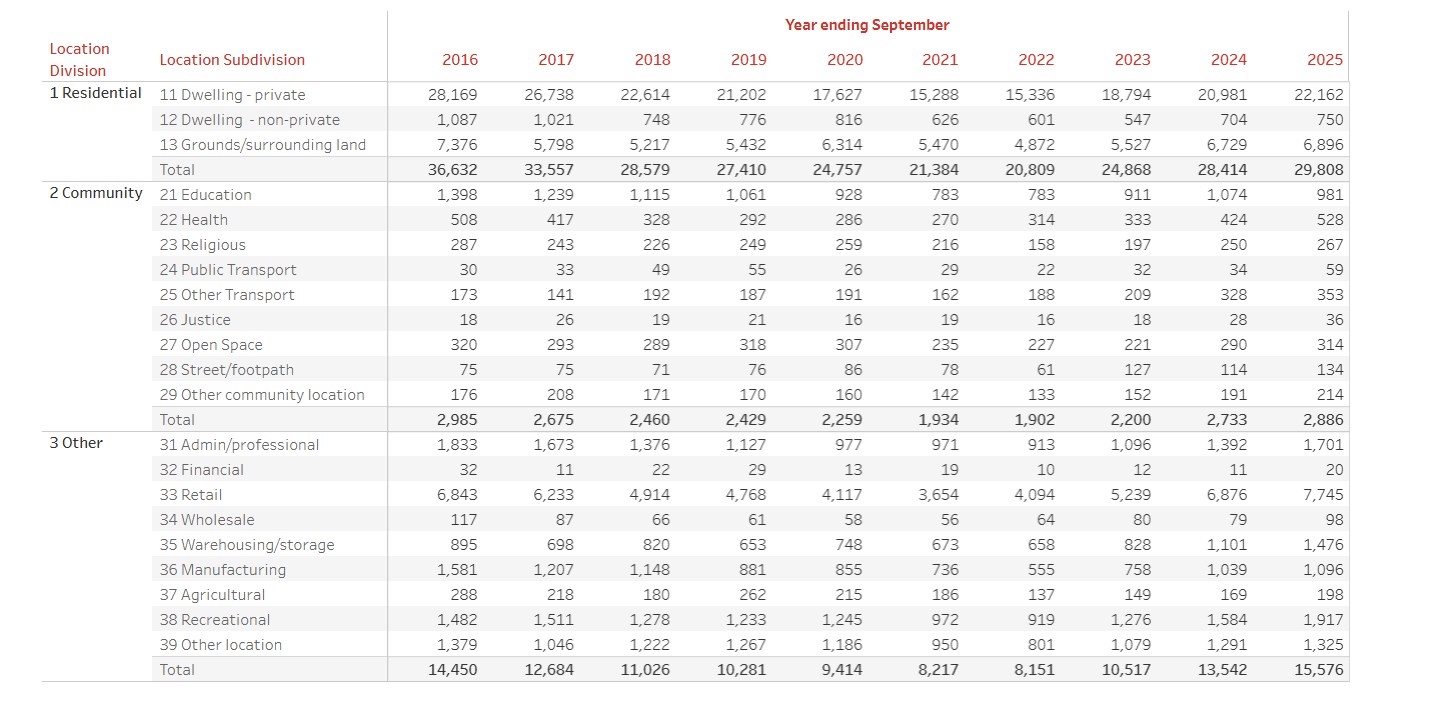
The CSA data shows that residential burglaries have fluctuated significantly over the past decade.
In 2016, Victoria recorded 36,632 residential burglaries. That number gradually declined over the following years, reaching a notable low during the COVID period.
By 2021, residential burglaries had fallen to 21,384 offences, the lowest level in the dataset. With many people working from home and travel restrictions in place, opportunities for burglars were reduced.
However, since the end of lockdowns, the numbers have begun climbing again.
Recent figures show:
- 2023: 24,868 residential burglaries
- 2024: 28,414 residential burglaries
- 2025: 29,808 residential burglaries
While this is still lower than the levels recorded earlier in the decade, the trend clearly shows residential burglaries rising again in recent years.
What the 2025 Data Means for Homeowners in 2026
Although the numbers are not at historic highs, the upward trend is a reminder that home security should not be taken for granted.
Several factors are likely contributing to the change:
- First, increased mobility. People are travelling again, returning to offices, and leaving homes unattended more often than during lockdown periods.
- Second, economic pressure. Property crimes such as burglary tend to increase during periods of financial stress, and we’re regularly reminded that we’re in a cost-of-living crisis.
- Third, older home security systems. Many homes still rely on outdated locks that can be easily forced or bypassed.
For homeowners, the takeaway is simple: basic physical security still matters.
Commercial Burglaries Are Also Increasing
The CSA data also tracks burglaries occurring at commercial and professional locations, such as retail shops, offices, warehouses and recreational venues.
This category shows a similar trend to residential burglaries:
- 2016: 14,450 commercial burglaries
- 2021: 8,217 offences (pandemic low)
- 2025: 15,576 offences
Retail locations make up the largest share of these incidents, with 7,745 retail burglaries recorded in 2025.
For business owners, particularly in busy Melbourne suburbs, this highlights the importance of maintaining strong lock systems and access control.
What the Data Suggests for 2026
The long-term pattern in the CSA data shows three clear phases:
- Higher burglary rates prior to 2020
- A sharp drop during the COVID lockdown years
- A gradual rise again since 2022
Although burglary levels have not yet returned to their peak from earlier in the decade, the upward trend suggests that homeowners and businesses should remain vigilant.
Many burglaries are opportunistic, meaning properties with weak locks, easy entry points, or poor visibility are more likely to be targeted.
Simple improvements such as quality deadlocks, secure windows, and well-maintained doors can significantly reduce risk.
Speak to a qualified and experienced locksmith about securing your residential or commercial property.
How to Reduce the Risk of a Break-In
In many cases, improving your home’s security is simple: strong door locks, reinforced door frames, and properly secured windows can significantly increase the effort required for forced entry. Visible cameras, alarm systems, and exterior lighting also discourage opportunistic offenders.
Just as important is avoiding signals that a home is empty. Timers on lights, collecting mail, and avoiding posting travel plans publicly can all reduce risk.
If you want more detailed advice, see our guide on improving home security:
👉 https://viclocks.com.au/5-top-tips-for-increasing-your-homes-security/
👉 https://viclocks.com.au/5-top-tips-for-increasing-your-homes-security/
The latest burglary figures show that, in Victoria, break-ins are gradually increasing.
For homeowners, the best response is prevention. Ensuring your doors, windows, and locks are properly secured is one of the simplest ways to protect your home and your peace of mind.
If you’re unsure whether your locks are still providing adequate protection, a professional locksmith can assess your current setup and recommend practical improvements.
Vic-Locks assists homeowners across Kew and greater Melbourne with lock upgrades, security improvements, and emergency locksmith services.
If you would like advice about improving your home security, contact our team today.